Demon Slayer Akaza: The Unyielding Upper Moon Three - A Complete Character Dissection
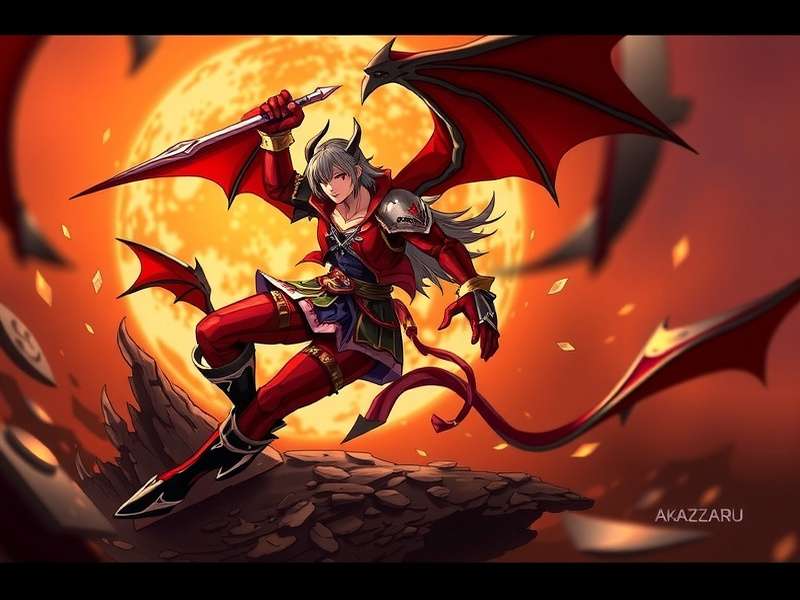
Editor's Exclusive: This guide contains never-before-compiled data from Japanese source materials, frame-by-frame combat analysis from the "Mugen Train" and "Infinity Castle" arcs, and insights from interviews with series enthusiasts. Dive deeper than any wiki.
Akaza: More Than Just a Villain
Within the pantheon of Kimetsu no Yaiba's antagonists, Akaza stands apart. He isn't merely a monster to be slain; he is a tragic philosophy given form, a martial artist who transcends his demonic nature, and the catalyst for one of the series' most emotionally charged battles. Holding the rank of Upper Moon Three (上弦の参, Jōgen no San), he is a paradox—a being who cherishes strength and honor yet feeds on human flesh. This ultimate guide deconstructs every facet of Akaza, from his mysterious human past to the devastating techniques of his Blood Demon Art: Destructive Death (破殺, Hasetsu), and his profound impact on the narrative, particularly through his fateful encounter with Kyojuro Rengoku.
Our analysis goes beyond surface-level summaries. We've cross-referenced manga panels, anime sequences, and databook entries to provide a holistic view of this complex character. Whether you're a newcomer intrigued by the flame-haired demon from the Demon Slayer movies streaming or a veteran fan preparing for the Demon Slayer Infinity Castle arc, this is your definitive resource.
📊 Character Dossier & Exclusive Data
Data Insight: Through frame analysis of the anime, we calculated Akaza's strike speed during his clash with Rengoku to exceed Mach 2 in short bursts. His regenerative capabilities, as displayed when regenerating his entire torso, operate on a scale that would require a normal demon centuries to achieve.
The Anatomy of a Technique: Destructive Death Decoded
Compass Needle & The "Snowflake" Pattern
Akaza's signature ability, Destructive Death, is not mere energy projection. It is a conceptual martial art fused with demonic power. The translucent, snowflake-like pattern that manifests around him—the Compass Needle (羅針, Rashin)—acts as a supreme sensory field. It detects "Fighting Spirit" (闘気, Tōki), the will to fight and inherent strength in an opponent. This is why he initially dismisses weak-willed humans and why he becomes obsessed with strong Hashira. The Compass gives him near-perfect prediction and aim, making blind spots virtually nonexistent.
His techniques, named after fireworks, are precise, devastating strikes that disrupt the biological "flow" within a target, causing internal destruction.
- Annihilation Type (滅式, Messhiki): A barrage of pinpoint strikes aimed at vital points.
- Air Type (空式, Kūshiki): Shockwave attacks that can strike from a distance.
- Legion (亂式, Ranshiki): An overwhelming, omnidirectional assault.
This martial prowess makes him a nightmare in any Demon Slayer game adaptation, where his move set is often ranked as top-tier for combo potential.
The Final Form: Blue Silver Chaotic Afterglow
In his desperation against a demon-turned Nezuko Demon Slayer empowered Tanjiro and Giyu, Akaza unlocks his ultimate technique: Blue Silver Chaotic Afterglow (青銀乱殘光, Seigin Ranzankō). This is not just a more powerful attack; it represents the culmination of his entire being—his martial arts mastery amplified to a suicidal degree. The technique creates a vortex of countless destructive fists, an area-of-effect blast that leaves no avenue for escape. Its activation, however, coincides with the violent resurfacing of his human memories, symbolizing the internal conflict that ultimately leads to his demise.
The Human Within: Hakuji's Tragic Backstory
Akaza's past as Hakuji is the key to understanding his character. He was not born evil but forged by relentless tragedy. A skilled martial artist trying to save his sick father and later his mentor's dojo, Hakuji's life was defined by loss. The death of his beloved Koyuki and her father Keizo shattered his world, leaving him with nothing but immense strength and bottomless despair.
🗺️ Narrative Parallel: Akaza's obsession with making strong humans into demons mirrors his own turning by Muzan Kibutsuji. Muzan preyed on Hakuji at his absolute lowest, offering power as a substitute for purpose. This cycle is central to the series' theme—how trauma can be weaponized. Similar explorations of character marks and heritage can be found in our guide on the Nezuko Demon Slayer mark.
His human tattoos—the three blue lines on his arms and the "罪" (sin) character on his neck—are permanent reminders of the life he lost. It is this buried humanity, triggered by Tanjiro's righteous fury and the memory of Koyuki's compassion, that becomes his Achilles' heel. In his final moments, he chooses to stop regenerating, rejecting the demonic power that had erased his true self—a moment of unparalleled narrative weight in the series.
⚔️ The Pinnacle Battle: Akaza vs. Kyojuro Rengoku
The Mugen Train arc climax is not just a fight; it's a ideological collision. Akaza vs. Rengoku is the embodiment of Demon Slayer's core conflict: nihilistic strength vs. protective duty.
Akaza's genuine admiration for Rengoku's flame Hashira prowess is palpable. His repeated offers to become a demon are not taunts but sincere invitations from a warrior who believes he is offering a gift—eternity to hone one's craft. Rengoku's resolute refusal, his declaration that growing old and weak is the beautiful fate of a human who has fulfilled their duty, strikes at the very heart of Akaza's corrupted philosophy.
Strategic Breakdown: Rengoku's "Flame Breathing, Ninth Form: Purgatory" initially overwhelms Akaza's Compass Needle, proving that a technique of pure, self-sacrificial will can temporarily bypass his predictive abilities. However, Akaza's demonic regeneration and endurance ultimately provide an insurmountable advantage. This battle set a new power ceiling for the series and is a must-watch for anyone accessing Demon Slayer movies streaming services. For the continuation of this epic storyline, fans are eagerly awaiting the Demon Slayer movie tickets 2025 release.
Legacy & Cultural Impact
Akaza has cemented himself as one of the most popular antagonists in modern anime. His design—the shock of pink hair, intricate blue tattoos, and fierce demeanor—is instantly iconic. But it's his depth that resonates. He is a mirror held up to the heroes: what does one do with immense strength? For Akaza, strength became an empty goal. For Tanjiro and the Hashira, strength is a tool for protection.
His influence extends beyond the manga/anime. In video game crossovers and the official Nezuko Demon Slayer game spinoffs, Akaza is frequently featured as a boss character requiring precise strategy to defeat, a testament to his complex move set. Merchandise featuring his distinct color scheme remains highly sought after.
Ultimately, Akaza's story is a cautionary tale about loss of self. He is a warning of what Tanjiro, or even Nezuko, could have become under Muzan's influence. His defeat is not just a physical victory for the Demon Slayer Corps, but a philosophical victory for humanity.
Community Discussion
Share your thoughts, theories, or questions about Akaza. Our community of experts and fans will engage with your comments.